

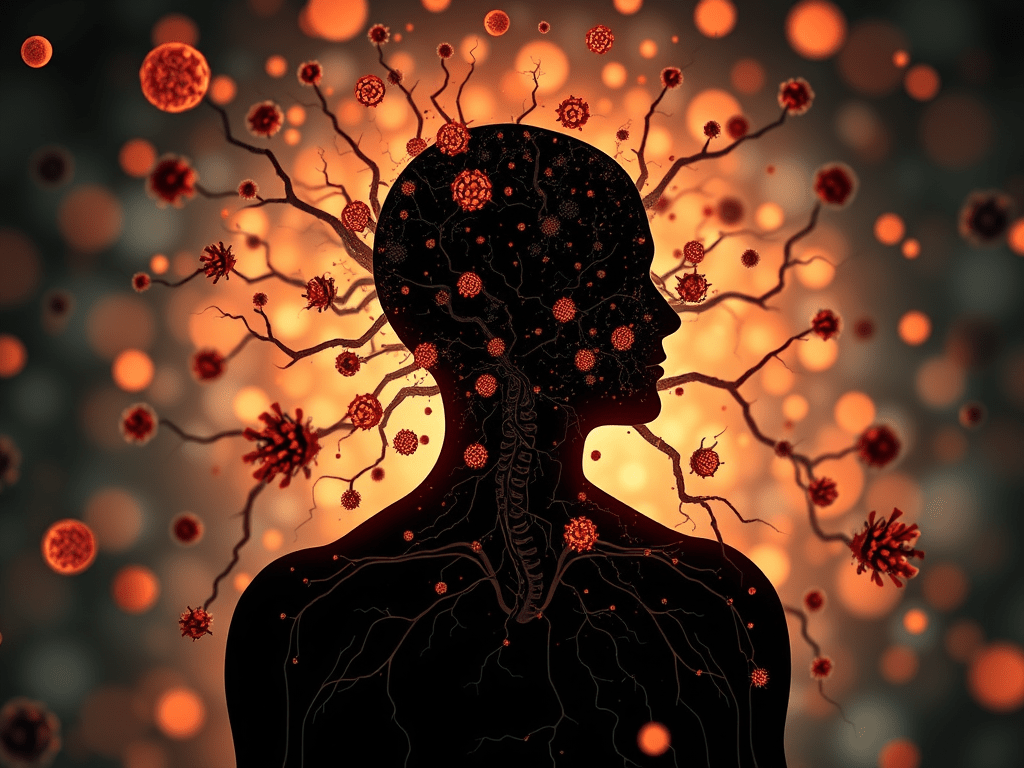
Introduction Modern medicine is built upon the concept of “disease”—diagnosable, nameable conditions that can be treated with drugs, surgery, or other interventions. Yet upon closer inspection, this concept begins to unravel. “Disease” is not a tangible entity that can be located or isolated apart from the body. Rather, it is a human construct, a label applied to clusters of symptoms and signs that fit a diagnostic pattern. The bacteria are real, the inflammation is real, the fatigue is real—but the disease is not. To restore true health, we must abandon the illusion of disease and reorient our focus toward understanding and preventing dysbiosis and dysregulation in the whole person.
The Construct of Disease What we call a disease is often a convenient abstraction used to standardize diagnosis and treatment. Terms like “strep throat,” “depression,” or “diabetes” are linguistic placeholders, not physical entities. “Strep throat” is not a discrete object—it is the body’s response to a Streptococcus infection, characterized by sore throat, fever, and inflammation. The disease label simplifies communication, but it obscures complexity. In reality, the symptoms can vary significantly between individuals, even with the same pathogen or trigger.
This abstraction becomes problematic when the label itself becomes the focus of treatment. Instead of investigating the web of causes—nutritional deficiencies, microbiome imbalance, trauma, chronic stress—clinical systems often pursue symptom suppression under the banner of treating the disease. This leads to a mechanistic and reductionist model of care that fails to support true healing.
Philosopher Georges Canguilhem noted that health and disease are not static states but expressions of an organism’s ability to adapt to its environment. Thus, naming a disease is more of a clinical convention than a declaration of ontological truth.
Ontological Monopolies and the Limits of Allopathic Medicine Allopathic medicine holds a de facto monopoly on the definition and treatment of “disease.” As long as health is framed through this narrow lens, healing remains confined to pharmaceutical and procedural solutions. Worse, those who practice or seek holistic care are often dismissed, because their methods do not target a “disease” per se.
But if disease is not a thing—if it exists only as a category within the allopathic framework—then it cannot be the basis for a comprehensive health system. Health must instead be understood through the dynamics of homeostasis: the body’s natural capacity to regulate, adapt, and recover.
Toward a Model of Dysregulation and Dysbiosis Rather than chasing disease labels, we must shift our focus to the roots of imbalance. Dysbiosis (the disturbance of the microbial ecosystem) and dysregulation (the loss of systemic harmony) offer a more precise lens for understanding chronic symptoms. These phenomena have measurable biological markers and often precede what gets labeled as “disease.”
The gut microbiome has been linked to nearly every aspect of health, including immunity, mood, metabolism, and inflammation. Chronic low-grade inflammation—often a result of microbial imbalance—is implicated in a wide range of conditions including cardiovascular disease, diabetes, and depression.
For example, before one is diagnosed with Type 2 diabetes, years of insulin resistance, poor sleep, nutrient deficiencies, and chronic stress may be present. These are not separate from the so-called disease; they are the process. Prevention, then, must begin before a disease ever manifests by restoring microbial balance, metabolic flexibility, and emotional resilience.
The Whole Person: Physical, Mental, Emotional, Spiritual Homeostasis is not purely biochemical—it is experiential. The nervous system, immune system, endocrine system, and digestive tract are constantly interfacing with mental and emotional states. Trauma, disconnection, lack of purpose, and spiritual emptiness create real physiological effects that cascade through the body.
Adverse childhood experiences, for instance, are strongly correlated with chronic illness later in life, including heart disease, autoimmune disorders, and mental health issues. Stress alters immune function, hormone levels, and gut barrier integrity, demonstrating the biological imprint of emotional life.
Healing requires integration. True prevention and restoration demand a whole-person approach. Food, movement, sleep, relationships, purpose, breath, and even silence become forms of medicine. The goal is not to “treat disease”—which, as we have shown, does not exist as a discrete object—but to steward life itself.
Conclusion The illusion of disease has led us down a path of fragmented, reactive, and symptom-centered medicine. It is time to evolve. By replacing the disease model with a dynamic systems model of dysbiosis and dysregulation, and by honoring the full spectrum of human experience, we open the door to genuine healing. This is not a rejection of science, but a reclamation of its purpose: to understand life and support its flourishing, not just to name its failings.
Health is not the absence of disease—it is the presence of harmony. And harmony cannot be prescribed; it must be cultivated.


Leave a comment